Emeriti Faculty
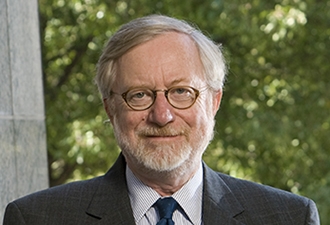
H.B. Robertson, Jr.
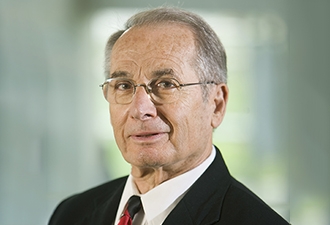
Horace B. Robertson, Jr., is Professor of Law (Emeritus). He came to the Law School in 1976 as Visiting Professor of Law, being appointed to the permanent faculty as Professor of Law the following year.
At Duke Law School
Professor Robertson taught a small section in torts every year, combining it in most years with instruction of the small section in research and
writing. Professor Robertson's primary research and teaching interests, however, were in the field of public international law, with primary
concentration in the law of the sea and the law of armed conflict. In this field he taught courses and seminars in public international law, law of
the sea, international organization and admiralty. Following the completion of the 1982 United Nations Convention on the Law of the Sea, Professor
Robertson served for a number of years on the Council on Ocean Law's Panel on the Law of Ocean uses, which produced a number of research papers
designed to encourage changes to the Convention which would make it acceptable for United States ratification, an effort which, combined with that of
other groups, resulted in the President's submission of the Treaty to the Senate for consent to ratification in 1995.
From 1986 to 1989, Professor Robertson served as Senior Associate Dean.
Subsequent to his retirement from Duke Law School at the end of 1989, Professor Robertson spent a year as the Charles H. Stockton Professor of International Law at the U.S. Naval War College in Newport, Rhode Island. He continues to serve as a member of the Advisory Committee on Operational Law of that institution.
Prior to coming to Duke, Professor Robertson served 31 years on active duty in the United States Navy, first as a general line officer (surface warfare) and for the last 21 years as a Judge Advocate. From 1972 to 1976 he served first as Deputy then as the Judge Advocate General of the Navy with the rank of Rear Admiral.
Professor Robertson attended Davidson College from 1940 to 1942 prior to being appointed to the U.S. Naval Academy, from which he received his B.S. degree in 1945. He received his J.D. Degree from Georgetown University Law Center in 1953. He also received a Master's Degree in International Studies from George Washington University in 1968.
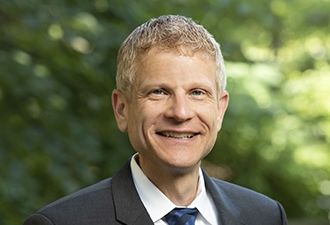
Richard Maxwell
Presently Harry R. Chadwick, Sr. Professor of Law
Emeritus, Duke University, Dean of UCLA School of Law from 1958-1969; Professor and Connell Professor of Law, UCLA, 1953-1981; educated at the
University of Minnesota where he was president of the Minnesota Law Review; has taught at various times at the University of North Dakota, the
University of Texas, Columbia University, the University of Utah, the University of California, Berkeley, Gonzaga University, Texas Tech University,
Hastings College of the Law, and St. Mary's University; served to Lt. Comdr. USNR, 1941-1946; was counsel to the Amerada Petroleum Corporation during
the early development of the Williston Basin; Fulbright Lecturer, Queen's University, Northern Ireland, 1970; Alumni Chair, University of Minnesota,
1970-71; Ford Foundation Professor, University of Singapore, 1971; Thomson Professor, University of Colorado, Summer 1982; West Coast Editor, Oil and
Gas Reporter, 1954 to present; Past Chairman of the Board, Private Adjudication Center, Duke University; lecturer at various times for the U.S. State
Department's cultural program in Liberia, Nigeria and Yugoslavia. Assisted in the establishment of a law school in Ethiopia in the 1960's.
Served at various times with the following groups: American Bar Association Task Force on Professional Utilization; American Bar Association Special Committee on Youth Education for Citizenship; American Bar Association Special Commission on Public Education in Law; California State Bar Commission to study the Bar Examination; Employee Rights Board of the City of Los Angeles; National Executive Committee of the Order of the Coif; Chairman, Council on Legal Education Opportunity; President, Association of American Law Schools; Chair, Advisory Committee on Law for the Fulbright Program; Chair, Advisory Committee for the United Kingdom Fulbright Program; Board of Visitors, Duke University School of Law; Board of Directors, Constitutional Rights Foundation; Board of Visitors, Southwestern University; Board of Trustees, California Western University; National Research Council Committee on Gas Production Opportunities; American Arbitration Association Labor Panel; Federal Mediation and Conciliation Service Labor Panel; Order of the Coif, 1947; UCLA Distinguished Teaching Award, 1976; UCLA Medal, 1982; LL.D. (Hon.), 1983, California Western; LL.D. (Hon.), 1993, Southwestern; Rocky Mountain Mineral Law Foundation, Clyde O. Martz Teaching Award, 1994 (with Howard R. Williams and Charles J. Meyers). Co-author of Modern Social Legislation (1950); Cases and Materials on Oil and Gas Law (6th ed. 1992), and California Cases on Security Transactions in Land (4thed. 1992); author of many articles on legal subjects in law reviews and other publications.
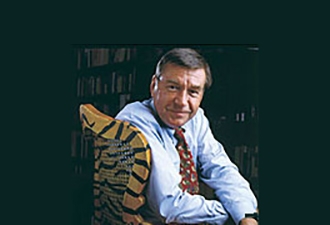
Clark C. Havighurst
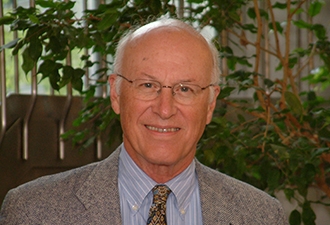
Clark C. Havighurst is a Professor of Law (Emeritus). He has taught courses in health care law and policy, antitrust law, and economic regulation at the Duke University School of Law since 1964. His scholarly writings include articles on most phases of regulation in the health services industry; the role of competition in the financing and delivery of health care; medical malpractice; private contracts as vehicles for reforming American health care; a wide range of antitrust issues arising in the health care field; and antitrust and other issues surrounding private standard setting, accrediting, etc. in health care and other fields. His law
school casebook, entitled Health Care Law and Policy: Readings, Notes, and Questions, was published by Foundation Press in 1988; a new edition, with two co-editors, was published in the Summer of 1998. In 1982, he published a major study of economic regulation in health care, Deregulating the Health Care Industry. A later book, Health Care Choices: Private Contracts as Instruments of Health Reform, was published in February 1995 by the American Enterprise Institute for Public Policy Research (AEI).
A member of the Institute of Medicine of the National Academy of Sciences, Professor Havighurst served as a member of the Institute's Board of Health Care Services from 1987 to 1997. He also served for many years as an adjunct scholar of the AEI. He has served, on sabbatical leaves, as a scholar in residence at the Institute of Medicine (1972-73) and the RAND Corporation, Santa Monica (1999) and as a resident consultant at the Federal Trade Commission (1978-79) and at the Washington, D.C., law firm of Epstein, Becker & Green (1989-90). In 1988-89, he served as the Executive Director of the Private Adjudication Center, Inc., an affiliate of the Duke Law School specializing in alternative dispute resolution; he also served for some years as a member of the PAC's executive committee. He has served as chairman of the executive and management committees of the Journal of Health Politics, Policy and Law. He edited the journal Law and Contemporary Problems from 1965 to 1970 and has been a visiting professor of law at Stanford, Northwestern, Michigan, and William & Mary. Professor Havighurst served as Interim Dean of Duke Law School in the last half of 1999.
Professor Havighurst is known as a leading and innovative proponent of policies that would rely less on government or the medical profession and more on competition and consumer choice to guide the health care industry's development. He began to write about the merits of competition in medical care as early as 1970. Rather than confining his attention to the then-emerging concept of health maintenance organizations, however, he anticipated many of the other innovations in managed care that began to appear only in the 1980s. In 1974, he wrote a brief amicus curiae stressing the need for antitrust enforcement in the health care industry in Goldfarb v. Virginia State Bar, the case in which the Supreme Court first applied the Sherman Act to the "learned professions." Since then, his scholarship has helped to point directions for antitrust enforcement in the health care field. In 1995-96, his critique of the antitrust agencies' overly regulatory approach to evaluating physician networks was instrumental in prompting a revision of enforcement policies.
One of the first academic critics of health planning and certificate-of-need laws, Professor Havighurst organized an early conference challenging their now-discredited regulatory premises at the AEI in 1972. He wrote critically of Professional Standards Review Organizations in 1975, arguing the need to confront "quality/cost trade-offs" in medical care rather than being concerned (as physicians tend to be) only with waste in the form of unnecessary, "flat-of-the-curve" medicine. He was also a critic of regulation in other forms and actively participated (while on a sabbatical in Washington in 1978-79) in the policy developments of that year, during which the federal government finally abandoned its regulatory agenda, tentatively embraced competition as a constructive force, and shifted responsibility for health care cost containment to public and private health plans. Since that time, he has continued to stress the potential virtues of decentralized decision making on health care issues.
Professor Havighurst's work in the field of medical malpractice has been equally unconventional. In 1973, he proposed a still-discussed "no-fault" strategy for redressing medical injuries while strengthening incentives to improve treatment outcomes. Instead of legislative reforms of malpractice law, he has proposed "private reform" - i.e., the use of private contracts to redefine patients' rights and providers' obligations. In work on practice guidelines and innovative health care contracts, Professor Havighurst sought once again to free the health care field from centralized decisions and professional dominance and to widen the scope of consumer choice. His 1995 book, on "private contracts as instruments of health reform," can be read as an attack on the legal system for systematically undermining opportunities for consumers to specify the legal rules under which their health care will be provided. A 2000 article endorses enterprise (vicarious) liability as a means of making managed-care organizations ultimately responsible for the quality as well as the cost of care, thus allaying some of the criticism currently directed at such plans. In a 2002 article ("How the Health Care Revolution Fell Short"), Professor Havighurst provided an extensive and highly critical review of developments in health policy since he first took an interest in them in the late 1960s. His 2000 article inHealth Affairs provided an overview of health care law, emphasizing its haphazard development, inconsistencies, and incoherence on matters of economics and basic policy.
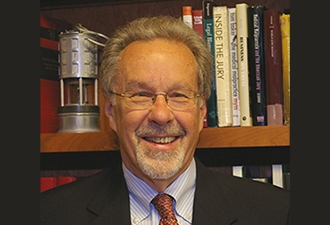
Thomas D. Rowe Jr.
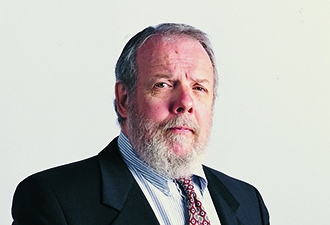
Thomas D. Rowe, Jr., is Professor of Law (Emeritus). B.A. 1964, Yale University; M.Phil. 1967, Oxford University; J.D. 1970, Harvard University. A native of Ann Arbor, Michigan, Professor Rowe was a Rhodes Scholar and commenced his professional career as a law clerk in the Supreme Court of the United States. He joined the Duke law faculty in 1975, served as associate dean from 1981 to 1984, and was senior associate dean in 1995-1996. He has also taught at Georgetown, Michigan, Virginia, UCLA, and Pepperdine, and on leaves from Duke has served with the U.S. Department of Justice in Washington, worked as an attorney with a private firm in Los Angeles, and been a visiting scholar at the RAND Corporation's Institute for Civil Justice. He has written in the fields of civil procedure, complex litigation, judicial remedies, and constitutional law.